

Midjourney vs Nano Banana: Which AI Image Generator Is Better for Your Workflow in 2026?
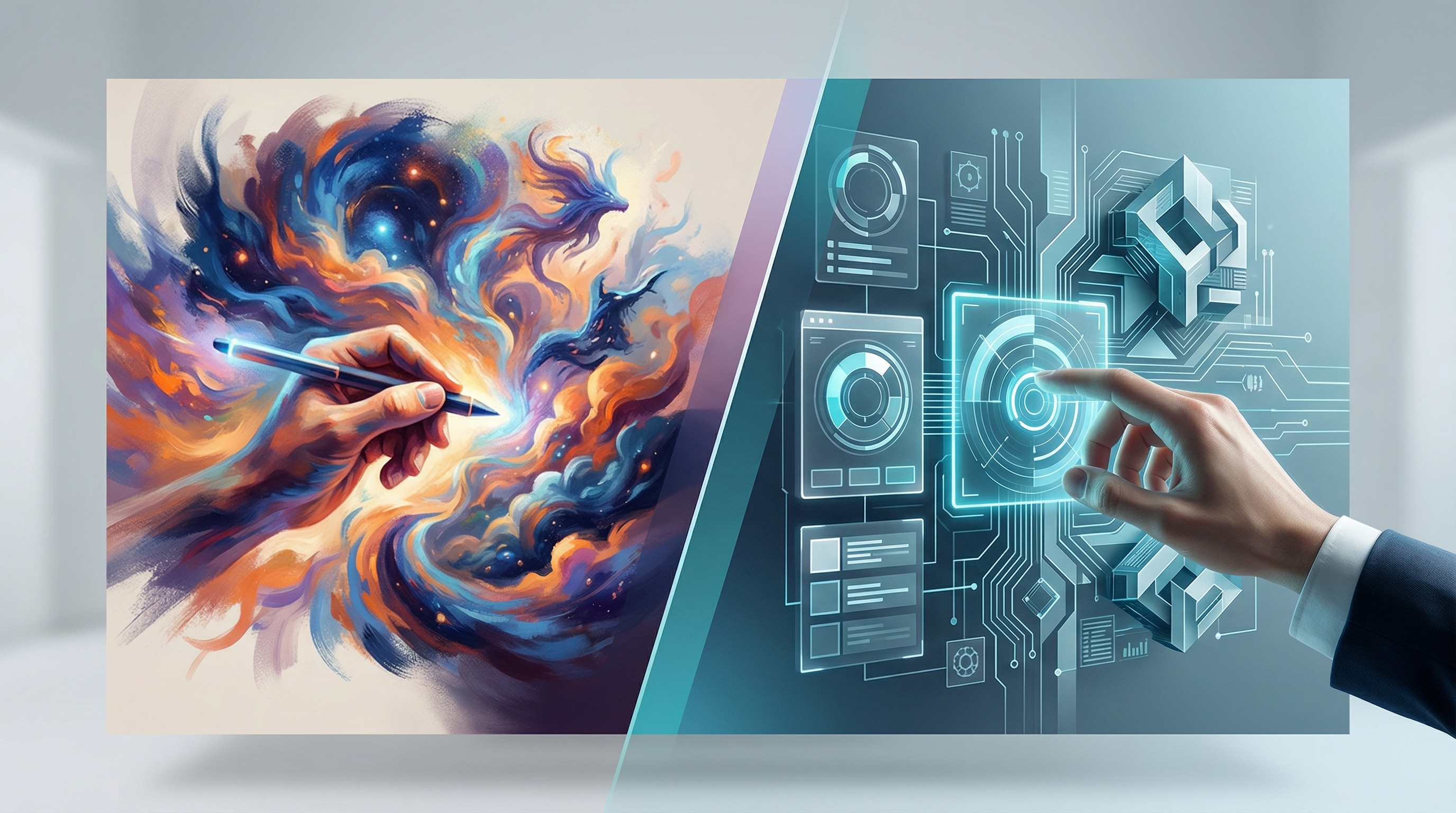
If you are comparing Midjourney vs Nano Banana, you are probably not looking for another vague “both are great” answer. You want to know which tool is actually better for the kind of images you need to make.
Here is the short version: Midjourney is still the better choice for style, visual taste, and artistic output, while Nano Banana is stronger for controllable editing, character consistency, multi-image workflows, and production-oriented tasks. In other words, Midjourney often wins on first-image wow factor, while Nano Banana often wins when you need to keep working on the image after generation.
That difference matters more in 2026 than it did a year ago. Google’s Gemini 2.5 Flash Image, widely referred to online as Nano Banana, pushed AI image generation closer to a real editing workflow. That changed the comparison. This is no longer just “which model makes prettier pictures?” It is also about which model fits your workflow, your budget logic, and your output goals.
In this guide, we will compare Midjourney vs Nano Banana across image quality, realism, price structure, creative control, ads, mockups, kids book illustrations, and practical use cases so you can choose the right one without wasting time or credits.
What Is Nano Banana, Really?
Before comparing the two, it helps to clear up the naming.
“Nano Banana” is the popular nickname many people use for Gemini 2.5 Flash Image, Google’s image generation and editing model. In search results, you will also see terms like Nano Banana Pro, Nano Banana 2, and even “Gemini 3 (Nano Banana Pro).” Some of those names reflect product packaging on third-party sites, while others reflect the way users casually talk about different quality or pricing tiers.
That naming confusion is one reason this topic is trending. People are often not sure whether they are comparing:
- Midjourney vs Google’s core image model
- Midjourney vs a third-party Nano Banana product wrapper
- Midjourney vs a higher-tier Nano Banana plan
- Midjourney vs an editing-focused workflow rather than a pure art generator
For practical decision-making, the bigger distinction is this:
- Midjourney is best known for highly aesthetic, stylized, visually impressive image generation.
- Nano Banana is best known for generation plus editing, multi-image fusion, scene transformation, and consistency across iterations.
If you start from that lens, the rest of the comparison becomes much easier to understand.
Midjourney vs Nano Banana at a Glance
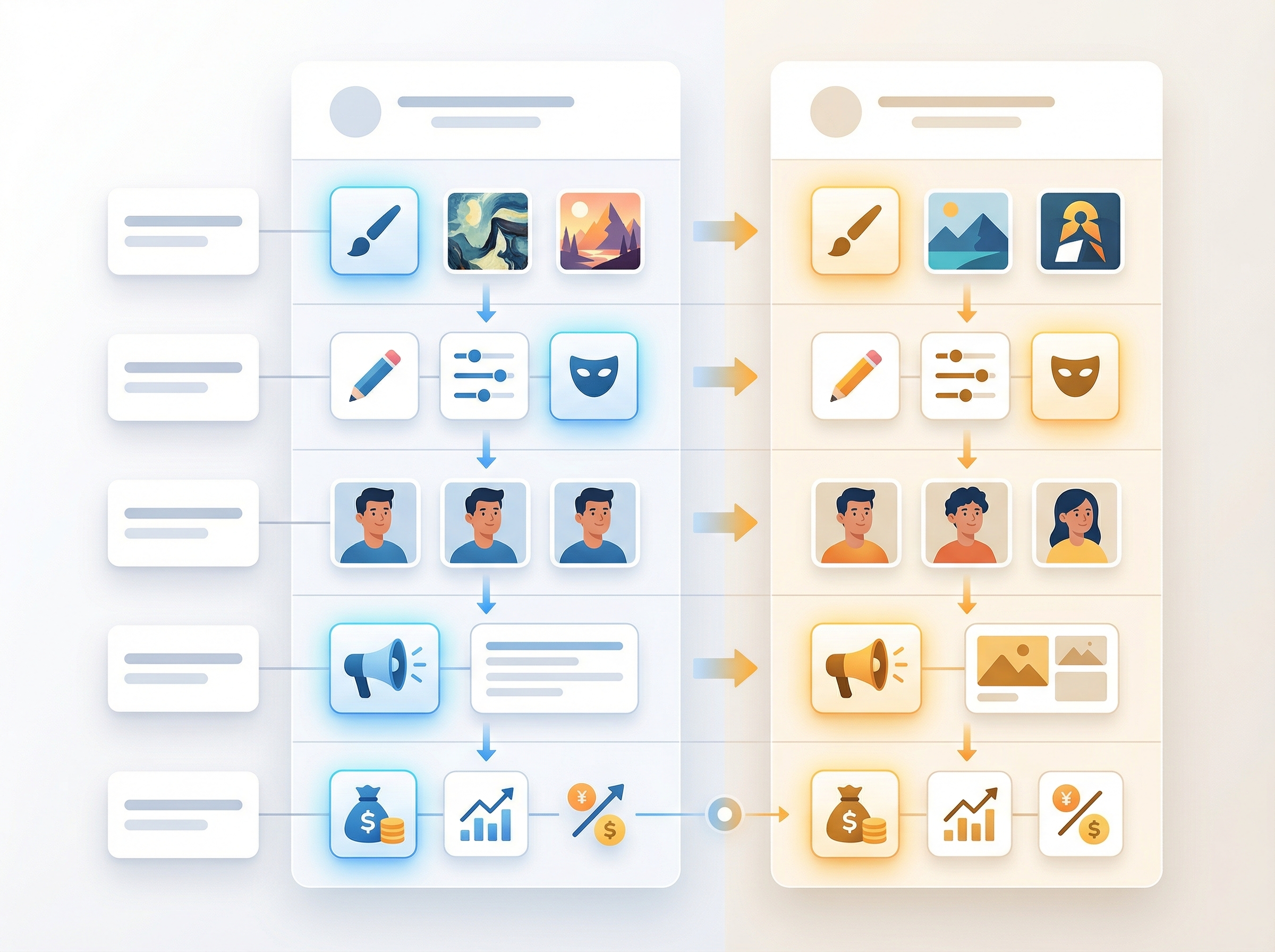
| Category | Midjourney | Nano Banana |
|---|---|---|
| Best for | Artistic image generation, concept art, moodboards, stylized visuals | Editing, transformations, multi-image workflows, marketing assets |
| Visual style | Strong artistic taste, cinematic feel, highly polished aesthetics | More utility-driven, often better at following explicit instructions |
| Prompt adherence | Good, but sometimes prioritizes vibe over literal accuracy | Often stronger when you need exact prompt following |
| Editing workflow | Improving, but not the main reason most users choose it | A major strength |
| Character consistency | Can be good with the right workflow, but not its main edge | Stronger for maintaining identity across edits and scenes |
| Multi-image use | Useful, but less workflow-centric | Stronger for combining references and iterating across assets |
| Realism | Strong, especially when guided well | Competitive, especially when realism needs to be controlled through edits |
| Creative exploration | Excellent | Good, but usually not the first pick for style-first creators |
| Pricing logic | Subscription mindset | Credit-based or usage-based mindset on many platforms |
| Best user type | Artists, designers, creators, visual explorers | Marketers, teams, product creators, workflow-heavy users |
That table captures the big picture, but the real answer depends on what you are trying to make.
Where Midjourney Still Wins
Better artistic taste and stronger first impressions
The biggest reason people still choose Midjourney is simple: it often produces images that feel more intentional, more cinematic, and more visually striking right away.
That matters because most users do not judge an image model by technical benchmarks. They judge it by the first few outputs. And Midjourney still has a reputation for producing images with stronger composition, mood, lighting, and style without requiring a long correction loop.
If your main goal is to generate something that instantly feels beautiful, dramatic, imaginative, or premium, Midjourney usually has the edge.
Better for concept art, moodboards, and style-led creative work
This is where nano banana vs midjourney becomes less about raw capability and more about creative direction.
Midjourney remains especially strong for:
- concept art
- stylized brand imagery
- moodboards
- editorial visuals
- fantasy and sci-fi scenes
- fashion-forward or cinematic compositions
- inspiration-first image generation
For many artists and visual thinkers, Midjourney is not just a tool for producing deliverables. It is a tool for discovering visual directions. That makes it hard to replace if your workflow starts with “show me something inspiring.”
Why creators still prefer Midjourney for visual exploration
A lot of creators do not want perfect prompt obedience. They want a model that surprises them in useful ways. Midjourney has historically been very good at that.
Sometimes that means the output drifts from the exact wording of the prompt. But in creative work, that is not always a flaw. In fact, it is part of the appeal. If you are exploring aesthetic directions rather than executing strict revisions, Midjourney’s visual instincts can feel like a feature rather than a limitation.
Where Nano Banana Wins
Better prompt following and more controllable outputs
If Midjourney is often stronger at “make it beautiful,” Nano Banana is often stronger at “make it exactly like this.”
That becomes a major advantage when you need:
- product-focused images
- specific object placement
- targeted visual revisions
- precise transformation instructions
- image editing via natural language
- consistency across multiple iterations
For many practical users, especially in marketing or e-commerce, this is where midjourney vs nano banana stops being close. A tool that follows instructions cleanly can save much more time than a tool that produces prettier but less controllable first drafts.
Better for editing, transformation, and image workflows
Google’s positioning of Gemini 2.5 Flash Image makes it clear that editing is central to the experience. Nano Banana is not just about generating from scratch. It is also about what happens after the first image exists.
That makes it better suited to tasks like:
- changing a background while preserving the subject
- keeping a character consistent across scenes
- generating alternate views of the same product
- combining multiple references into a single output
- turning one asset into many campaign variants
- refining creative assets through conversation instead of starting over
If your workflow involves revision loops, not just one-shot generation, Nano Banana becomes much more attractive.
Better for teams, ads, and production-oriented use
This is also why Nano Banana can outperform Midjourney in business settings.
A creative team usually does not ask, “Which model makes the coolest image?” They ask things like:
- Can we keep the product consistent?
- Can we turn one campaign into ten variants?
- Can we revise an image without rebuilding it?
- Can we maintain the same character across a series?
- Can we integrate this into a larger production workflow?
That is where Nano Banana has the more practical profile.
Midjourney vs Nano Banana on Price
A lot of searches around this topic are really about cost, including queries like:
- nano banana vs midjourney price
- nano banana vs midjourney price comparison
- nano banana pro api cost vs midjourney
The important thing is that these tools are often sold with different pricing logic.
Midjourney pricing feels like a creator subscription
Midjourney is typically evaluated like a creative subscription. People ask whether the monthly plan is worth it for their personal work, side projects, client concepts, or regular visual output.
That means Midjourney pricing often feels natural for:
- freelancers
- hobbyists
- visual creators
- people who generate often but do not need API-style accounting
- users who want a “pay monthly and create” mental model
Nano Banana pricing often feels like a credit or production model
On Nano Banana platforms, pricing is commonly framed in credits, usage, or output tiers. Some services also distinguish between standard Nano Banana generations and higher-cost Nano Banana Pro / 2 outputs.
That kind of structure can make more sense for:
- teams with variable workloads
- people who want finer-grained usage control
- businesses that need to map image generation to campaign or production costs
- users who care about cost per output more than flat subscription access
Which one is cheaper?
There is no universal answer because it depends on how you work.
- If you generate lots of creative images casually and continuously, Midjourney may feel more economical.
- If you generate fewer images but need each one to do more work through editing, variants, and workflow control, Nano Banana may be the better value.
- If you rely on high-resolution or premium tiers, the cost equation changes again.
So the real question is not just which is cheaper, but which pricing model matches your output behavior.
Image Quality by Use Case
This is where the comparison becomes much more useful than a generic feature list.
Midjourney vs Nano Banana for realism
For the query midjourney vs nano banana realism, the answer depends on what kind of realism you want.
If you mean photorealistic atmosphere, Midjourney often performs better visually. It can produce images that feel richer, more cinematic, and more emotionally convincing right away.
If you mean controlled realism, where you need a realistic image with specific constraints, preserved details, or iterative changes, Nano Banana can be the better tool. Its editing and instruction-following strengths matter more in those situations than pure aesthetic flair.
So:
- Best for atmospheric realism: Midjourney
- Best for controlled realistic revision workflows: Nano Banana
Nano Banana vs Midjourney for creative output
For nano banana vs midjourney creative, Midjourney is still the stronger default answer.
It tends to win when the goal is:
- visual originality
- artistic mood
- strong style
- dramatic composition
- “wow” factor
- inspiration and experimentation
Nano Banana can still create compelling work, but it usually feels more valuable when the image is part of a broader workflow, not when the image itself is the entire point.
Midjourney vs Nano Banana for Facebook ads
For midjourney vs nano banana for facebook ads, Nano Banana often has the practical advantage.
Why? Because ad creative rarely ends with one beautiful image. Teams usually need:
- multiple variations
- revised copy zones
- product consistency
- background swaps
- format adaptation
- campaign-specific iterations
Midjourney may create stronger first-look visuals, but Nano Banana is often easier to bend toward actual ad production needs. If your ads require repeated controlled variations, Nano Banana is usually the more useful choice.
Nano Banana mockups vs Midjourney
For nano banana mockups vs midjourney, Nano Banana is usually the more logical fit.
Mockups benefit from:
- object consistency
- layout control
- reference-based generation
- revision workflows
- preserving product identity
Midjourney can produce gorgeous product scenes, but mockups are not always about beauty alone. They are about repeatability and controllability. That tends to favor Nano Banana.
Midjourney vs Nano Banana Pro for kids book illustrations
For midjourney vs nano banana pro kids book, the right answer depends on whether your biggest problem is style or consistency.
Choose Midjourney if your top priority is:
- a magical visual style
- expressive scenes
- painterly charm
- rich illustration mood
Choose Nano Banana Pro if your top priority is:
- keeping a child character consistent across pages
- editing scenes while preserving the cast
- maintaining visual continuity across a series
For many children’s book creators, the best workflow may actually be hybrid: use Midjourney to define the visual language, then use Nano Banana to help keep the world and characters stable across multiple illustrations.
Midjourney vs Nano Banana Pro vs Nano Banana 2
This keyword family shows up a lot because users are trying to compare not just two tools, but multiple tiers or generations.
The cleanest way to think about it is:
- Midjourney = style-first image generation tool
- Nano Banana = generation + editing + reference-aware workflow tool
- Nano Banana Pro / Nano Banana 2 = higher-tier or more resource-intensive versions on some platforms, usually associated with better quality, higher resolution, or more advanced output modes
If you are evaluating midjourney vs nano banana pro, the question becomes more serious because the higher-tier Nano Banana experience is often where its workflow strengths become more obvious. That is especially true for professional teams, asset pipelines, and users who care about consistency over many outputs.
But even then, Midjourney still tends to hold the aesthetic advantage for many creative-first users.
What Real-World Comparisons Suggest
Independent comparisons are useful here because they often test the models under the same prompts.
In broad terms, the pattern is consistent:
- Midjourney is more likely to impress visually on first output
- Nano Banana is more likely to feel useful when you need to revise, direct, or extend the result
- People who value image beauty often lean Midjourney
- People who value controllability often lean Nano Banana
That split also helps explain why discussions around midjourney vs nano banana reddit and related comparison queries are so mixed. Users are often evaluating different things without realizing it. One person is judging art quality. Another is judging workflow efficiency. Both may be right for their use case.
Midjourney vs Nano Banana vs ChatGPT and Other Alternatives
Searchers are also comparing these tools against broader AI image stacks, including:
- midjourney vs nano banana vs chatgpt
- midjourney vs nano banana vs leonardo ai
- krea vs midjourney vs nano banana
- seedream vs nano banana vs midjourney
That tells us something important: people are not just choosing one image model. They are choosing an ecosystem.
vs ChatGPT image generation
ChatGPT image generation is often appealing because it is easy to access and broadly useful. But in a head-to-head comparison, users usually look beyond convenience.
- If you want a specialized visual aesthetic engine, Midjourney still feels more purpose-built.
- If you want stronger editing and transformation logic tied to Google’s image model direction, Nano Banana may feel more specialized.
vs Leonardo AI, Krea, and others
Tools like Leonardo AI and Krea often compete on speed, interface, flexibility, and workflow extras. But the reason Midjourney vs Nano Banana stands out as a search topic is that it represents a more meaningful strategic choice:
- art-first generation
- versus
- generation plus editing workflow
That distinction is clearer than in many other AI image comparisons.
Should You Choose One, or Use Both?
This is the part many comparison articles miss.
For a lot of serious users, the best answer is not to replace one with the other. It is to use each where it is strongest.
A practical hybrid workflow looks like this:
- Use Midjourney to explore style, mood, composition, and visual direction.
- Pick the strongest image or visual concept.
- Move to Nano Banana for editing, consistency, alternate views, scene transformations, or multi-asset expansion.
That workflow makes sense because the two tools are strongest at different stages.
If your work involves concept creation first and production refinement second, using both can be more efficient than forcing one tool to do everything.
Final Verdict: Which One Should You Choose?
Choose Midjourney if you care most about:
- artistic quality
- style and mood
- concept art
- cinematic visuals
- inspiration-first creative work
- generating images that look impressive immediately
Choose Nano Banana if you care most about:
- prompt accuracy
- controllable editing
- character consistency
- multi-image fusion
- ads, mockups, and production workflows
- creating many variants from one visual direction
Choose Nano Banana Pro / 2 if you need:
- higher-tier output options
- more serious production usage
- better economics for team or workflow-heavy use
- stronger support for repeated professional image tasks
Choose both if your workflow includes:
- exploration and ideation at the start
- structured editing and extension later
So, is Nano Banana better than Midjourney? Not universally.
Is Midjourney better than Nano Banana? Also not universally.
The better answer is this:
- Midjourney is better for art-first image generation.
- Nano Banana is better for edit-first and workflow-heavy image production.
That is the comparison that actually matters.
FAQ
Is Nano Banana better than Midjourney?
Nano Banana is better for editing, consistency, and workflow control. Midjourney is better for style, atmosphere, and artistic first outputs.
Is Midjourney better for realism?
Midjourney is often better for cinematic and aesthetically strong realism. Nano Banana can be better when realistic outputs need careful editing or strict prompt control.
Is Nano Banana cheaper than Midjourney?
Sometimes, but not always. Midjourney often fits a subscription mindset, while Nano Banana often fits a credit or usage mindset. The better value depends on how often you generate and how much editing you need.
Which is better for Facebook ads and marketing creatives?
Nano Banana is often better for ads because it supports controlled revisions, consistency, and multiple variants more naturally.
Which is better for mockups?
Nano Banana usually makes more sense for mockups because mockup workflows depend heavily on control, consistency, and reference-based revision.
Which is better for kids book illustrations?
Midjourney is often better for style and visual magic. Nano Banana Pro may be better for consistency across recurring characters and scenes.