

What Is Seedance 2.5? Features, Release Timeline, and Why It Matters
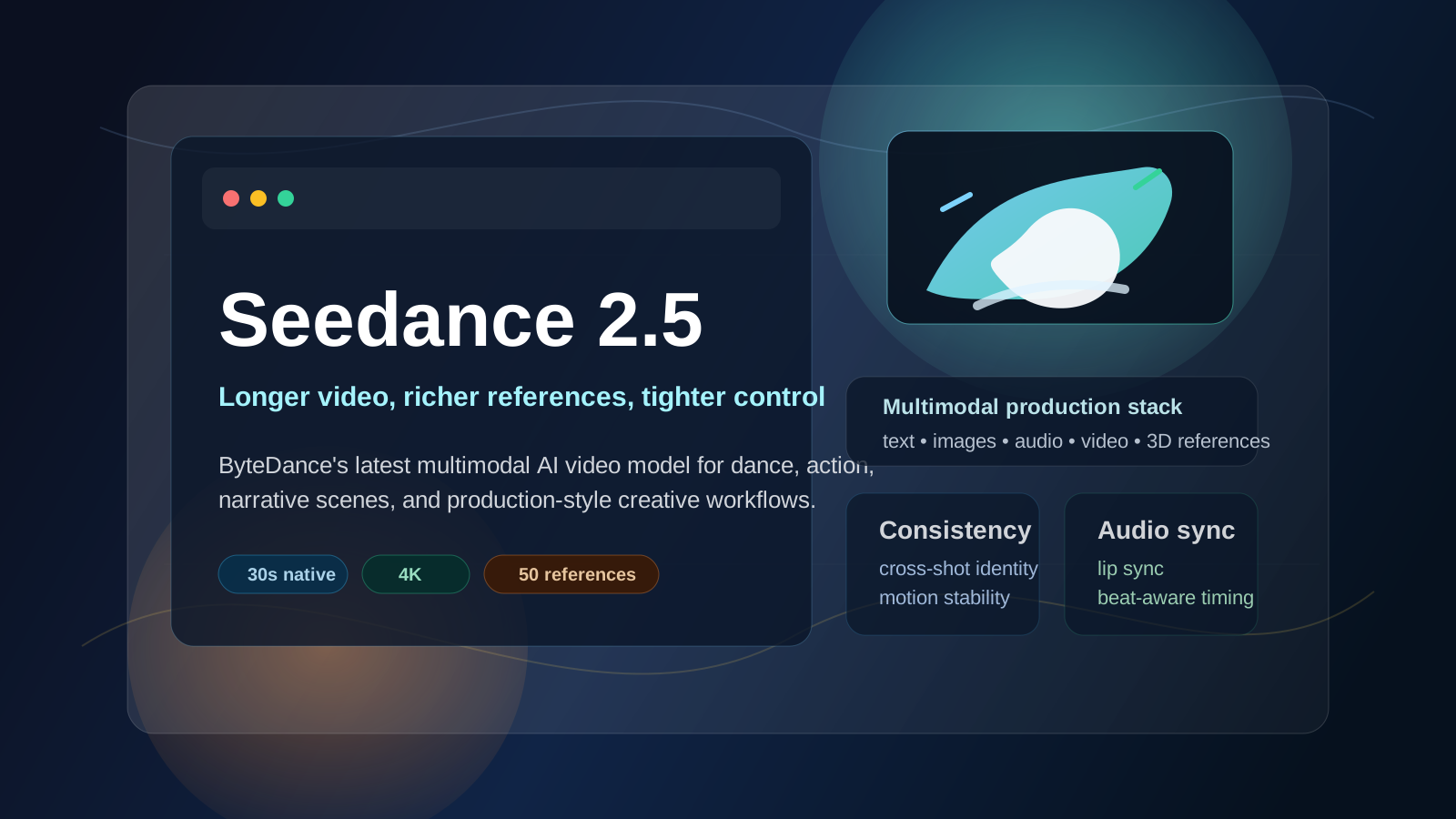
Seedance 2.5 is ByteDance's newest AI video model in the Seedance family, and it is being positioned as a major step up from earlier multimodal video workflows. The headline is not just better quality. It is longer native generation, higher resolution, more reference-driven control, and stronger continuity across scenes.
That combination is why the model is getting so much attention. Based on recent conference disclosures and early public reporting, Seedance 2.5 is aimed at creators who need more than short prompt-to-video demos. It is meant for controlled production work: branded storytelling, dance and action clips, narrative sequences, and edit-heavy workflows where consistency matters.
If you want a practical overview page to follow, seedance 2.5 is a useful reference point alongside ByteDance's official Seed and Volcano Engine channels.
What is Seedance 2.5?
Seedance 2.5 is an upgraded multimodal video generation model from ByteDance. It is designed to turn combinations of text, images, audio, video, and other references into high-quality video output while giving users tighter control over motion, framing, continuity, and audiovisual timing.
In plain English, the model is supposed to do two difficult things at once. First, it needs to generate visually strong clips. Second, it needs to stay controllable enough for real creative work instead of collapsing into random variation every time you revise a shot.
That is the real significance of Seedance 2.5. It is not just another model promising prettier output. It is being presented as a more production-aware system for guided video creation and editing.
What are the biggest upgrades in Seedance 2.5?
The latest public information points to five major changes.
1. Native 30-second video generation
One of the clearest reported upgrades is length. Seedance 2.5 is said to support native generation of single 30-second videos, which is a meaningful jump from shorter clip-first workflows that often force users to stitch scenes together manually.
That matters because duration changes the kind of video you can make. A model that holds up for 30 seconds is more useful for dance sequences, product storytelling, stylized ads, and multi-beat narrative content than one that only excels in short bursts.
2. Native 4K output
Another widely cited upgrade is native 4K resolution. If that holds in general availability, it would make Seedance 2.5 more relevant for commercial teams that care about sharper exports, cleaner reframing, and less quality loss in downstream editing.
Higher resolution alone does not guarantee a better model, but it does make the system more practical for agencies, brand teams, and creators who need footage that survives real post-production.
3. More multimodal references and tighter control
Seedance 2.5 is also being described as dramatically expanding the reference window. Recent reporting says the model can take up to 50 multimodal reference assets, including text, images, audio, video, and even some 3D inputs.
This is one of the most important workflow improvements in the whole release.
More references mean users can guide character identity, brand assets, scene composition, motion style, soundtrack cues, and editing targets with much more precision. Instead of relying on a single prompt to carry everything, the model can anchor itself to a broader creative package.
4. Better consistency, motion stability, and camera control
ByteDance appears to be pushing Seedance 2.5 as a more controllable model rather than only a more cinematic one. The key claims focus on stronger cross-shot consistency, more stable movement, improved physical realism, and more director-like control over camera behavior.
That matters because continuity is still one of the hardest problems in AI video. A great single shot is easy to demo. Keeping the same person, brand object, or environment coherent across multiple shots is much harder, and that is exactly where professional users feel the pain.
Just as important, recent descriptions suggest smarter revision workflows. Instead of treating every camera or action adjustment as a full restart, Seedance 2.5 is being framed as better at targeted changes inside an existing creative direction.
5. Stronger audio generation and synchronization
Another major upgrade is native audio handling. Public descriptions point to built-in audio generation, lip sync, beat-aware timing, and better sound-effect matching.
That makes Seedance 2.5 especially interesting for music-led content, dance videos, performance clips, and short narrative scenes where image quality alone is not enough. If the model can keep motion and sound aligned more reliably, it becomes more valuable as a complete creation tool rather than just a silent clip generator.
Some early summaries also claim notable gains in prompt adherence, in some cases around the 20 percent range. Even if the exact number should be treated cautiously until broader testing arrives, the direction is important: users want a model that follows intent more reliably without excessive prompt iteration.
Seedance 2.5 vs Seedance 2.0
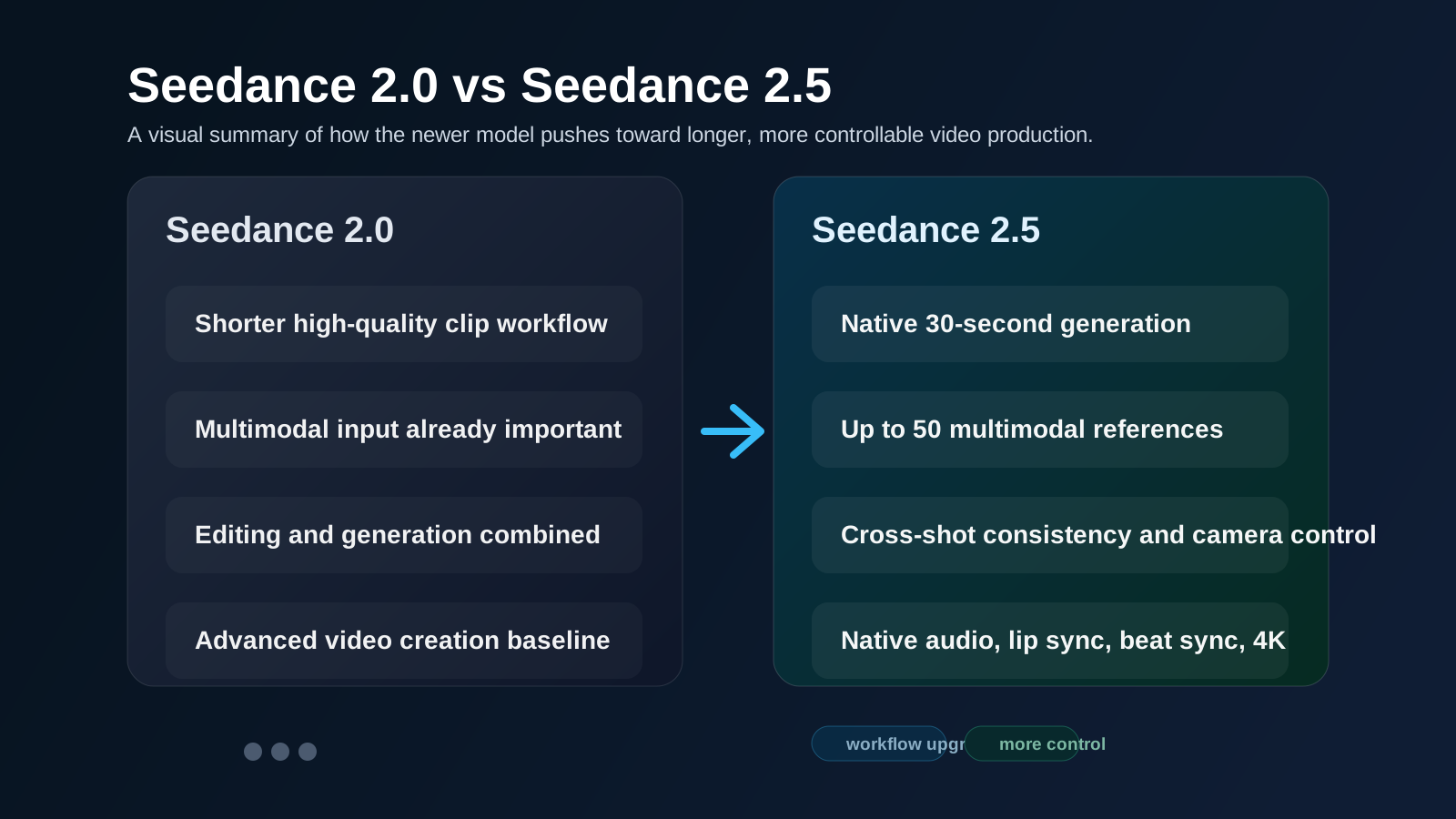
The easiest way to understand Seedance 2.5 is to compare it with the earlier public Seedance positioning.
| Area | Seedance 2.0 | Seedance 2.5 |
|---|---|---|
| Video length | Publicly presented around shorter high-quality generation workflows | Reported native single-shot generation up to 30 seconds |
| Resolution | Strong quality positioning, but less emphasis on 4K-native output in early public descriptions | Reported native 4K generation |
| Reference inputs | Multimodal references already part of the story | Reported expansion to as many as 50 multimodal references |
| Control | Generation plus editing-oriented controls | Stronger focus on continuity, motion stability, and camera direction |
| Audio | Audio-aware multimodal direction already important | Stronger pitch around native audio, lip sync, beat sync, and effects matching |
| Use case emphasis | Advanced multimodal video creation | More production-ready storytelling, branded content, dance, and action workflows |
The pattern is clear. Seedance 2.0 established the family as a serious multimodal video system. Seedance 2.5 appears to push that foundation toward longer-form, more controllable, more commercially useful video creation.
Why Seedance 2.5 matters for creators
The biggest reason Seedance 2.5 matters is not that it sounds bigger on paper. It is that the upgrade direction matches what creators actually need.
Most AI video tools still break down in the same places:
- they struggle to preserve subjects across shots
- they lose motion quality when scenes become more dynamic
- they treat audio as an afterthought
- they make iterative editing too expensive because each change feels like a fresh generation
Seedance 2.5 is interesting because its reported improvements target those exact weaknesses.
For solo creators, that could mean fewer regeneration cycles and more usable footage per prompt. For agencies and brand teams, it could mean better alignment between creative intent and final output. For studios experimenting with AI-assisted production, it suggests a workflow where references, edits, and continuity can live in one system instead of being split across multiple disconnected tools.
Who should pay attention to Seedance 2.5?
Seedance 2.5 looks most relevant for users who care about controllability, not just novelty.
Creative teams making branded video
If a team needs consistent brand elements, recurring characters, or recognizable environments, larger reference capacity and better continuity are more valuable than raw visual flair alone.
Dance, music, and action creators
The model's emphasis on movement, beat sync, lip sync, and audio-aware timing makes it especially relevant for creators working with choreography, performance clips, and rhythm-led storytelling.
Narrative video operators
Anyone trying to produce multi-shot story sequences should care about the reported gains in duration, camera control, and cross-scene consistency. Those are the features that move a model closer to narrative usefulness instead of one-off viral demos.
Product, marketing, and concept teams
Teams that need quick concept films, product motion mockups, or ad-style iterations may benefit from a model that can follow richer references and make more targeted revisions without rebuilding the entire clip from scratch.
Is Seedance 2.5 officially released?
This is where the answer needs some nuance.
Recent disclosures indicate that Seedance 2.5 has been announced at the Volcano Engine FORCE conference, with China prioritized first and broader rollout expected afterward. Some public discussion points to enterprise beta access ahead of full release, with wider availability reportedly planned around early July 2026.
At the same time, public access details still appear to be catching up to the product narrative. In practice, that means people should separate two questions:
- Has ByteDance publicly introduced Seedance 2.5?
- Can ordinary users access it broadly right now through a stable public product surface or API?
The first answer appears to be yes. The second is more rollout-dependent.
That distinction matters. Many frontier AI releases become visible in conference material and partner channels before they become easy for the wider public to test directly.
Where will Seedance 2.5 likely be available?
The most likely access paths are ByteDance's official Seed ecosystem and Volcano Engine product channels, potentially followed by broader API and platform access as the rollout matures.
If the current rollout pattern holds, users should expect availability to expand through official product pages, enterprise-facing workflows, and developer-facing access rather than through a single universal public launch on day one.
For now, the safest move is to monitor official ByteDance announcements while using third-party overview pages only as supplementary references, not as proof of final product availability.
What does Seedance 2.5 suggest about the future of AI video?
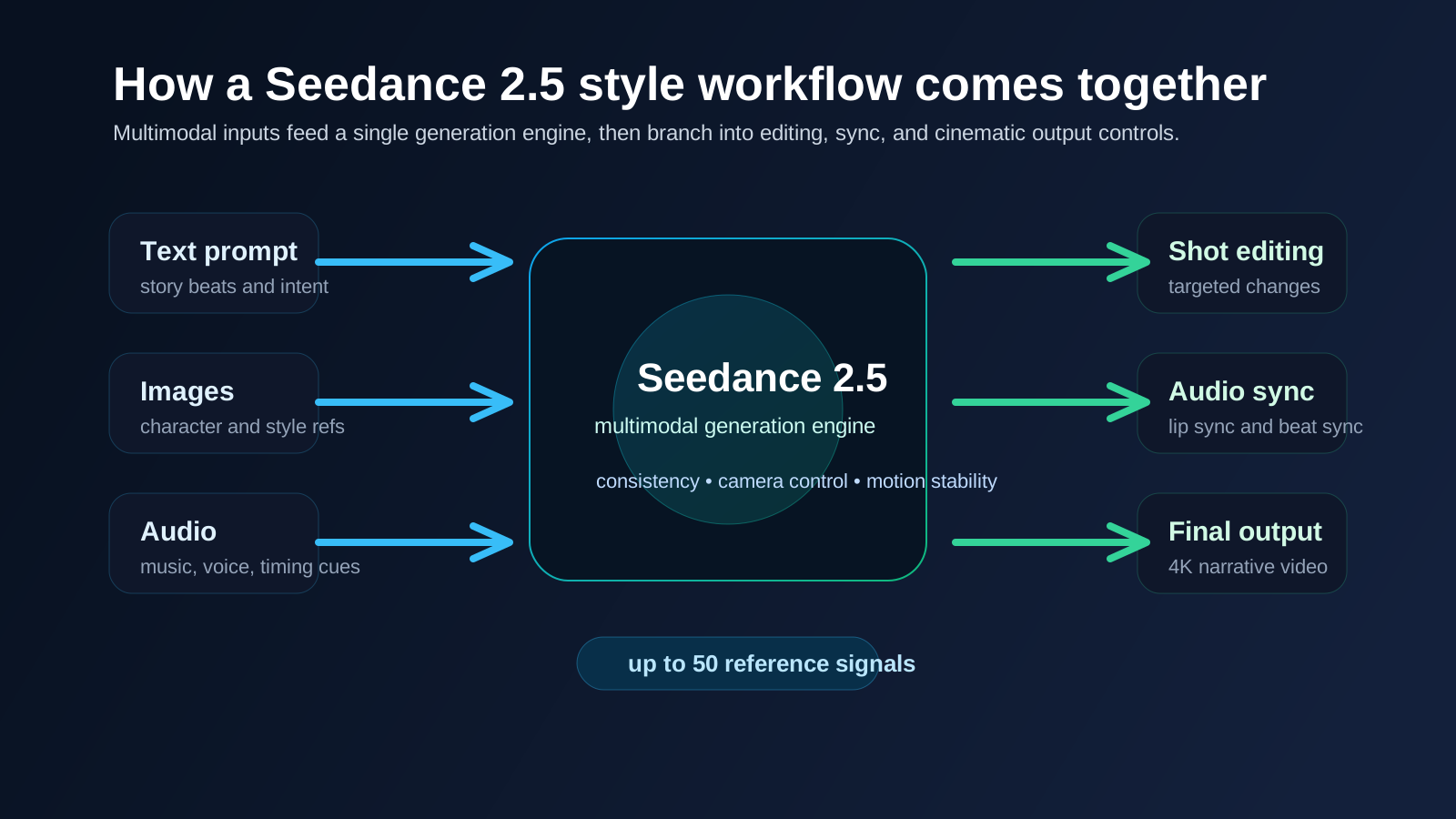
Seedance 2.5 reflects a broader shift in the market. The competition is no longer only about who can generate the prettiest short clip. It is about who can offer the most controllable end-to-end workflow.
That includes:
- longer coherent generations
- richer multimodal references
- stronger cross-shot consistency
- better editing without total regeneration
- audio that feels native to the creation process
If Seedance 2.5 delivers well on those points, it will matter not just as a stronger model from ByteDance, but as a sign that AI video is moving from demo culture toward production systems.
FAQ
What is Seedance 2.5?
Seedance 2.5 is ByteDance's latest AI video generation model in the Seedance family, designed for multimodal video creation using text, images, audio, video, and other references.
What is new in Seedance 2.5?
The biggest reported upgrades include native 30-second video generation, native 4K output, support for up to 50 multimodal references, stronger consistency across shots, more advanced camera control, and better audio synchronization.
Is Seedance 2.5 better than Seedance 2.0?
It appears to be a meaningful upgrade, especially for users who care about longer clips, higher resolution, richer references, and more controllable storytelling. The strongest benefits look workflow-related, not just cosmetic.
Is Seedance 2.5 available now?
It appears to have been publicly introduced, but broad access still looks dependent on rollout timing, platform surface, and possible beta restrictions.
What is Seedance 2.5 best for?
Based on its current positioning, Seedance 2.5 looks especially suited for dance, action, music, branded storytelling, and other video workflows where continuity, motion quality, and audio alignment matter.
Final verdict
Seedance 2.5 looks like one of ByteDance's most important AI video upgrades so far because it aims at the real bottlenecks in creative production: duration, controllability, continuity, and audiovisual coherence.
That is why the model matters even before full public rollout is settled. It points to a more mature category of AI video system, one built for guided production rather than isolated visual demos.
If the reported features hold up in wider use, Seedance 2.5 could become one of the more influential multimodal video releases of this cycle.